Ensuring Safety Through Autonomous Systems Safety Consulting
Autonomous systems are transforming industries by enhancing efficiency and enabling new capabilities. However, their complexity introduces significant safety challenges. Ensuring these systems operate reliably and securely requires expert guidance. We focus on autonomous systems safety consulting to help companies navigate these challenges and meet rigorous industry standards.
The Importance of Autonomous Systems Safety Consulting
Safety is paramount when developing or integrating increasingly autonomous systems. These systems operate in dynamic environments and often interact with humans, making risk management critical. Autonomous systems safety consulting provides a structured approach to identifying hazards, assessing risks, and implementing controls that mean industry best practices and prepare your organization for integration with larger operations.
Companies benefit from consulting by:
Aligning with regulatory requirements: Autonomous systems must comply with evolving safety standards such as ISO 26262 for automotive, DO-178C for aerospace, and a plethora of newly evolving standards related to form factors: from drones and underwater robotics to humanoid robotics.
Reducing liability: Proper safety analysis minimizes the risk of accidents and costly recalls.
Enhancing system reliability: Safety consulting ensures robust design and testing processes throughout to reduce costs later and protect your employees and customers at all stages.
Facilitating certification: Expert guidance streamlines the path to regulatory approval.
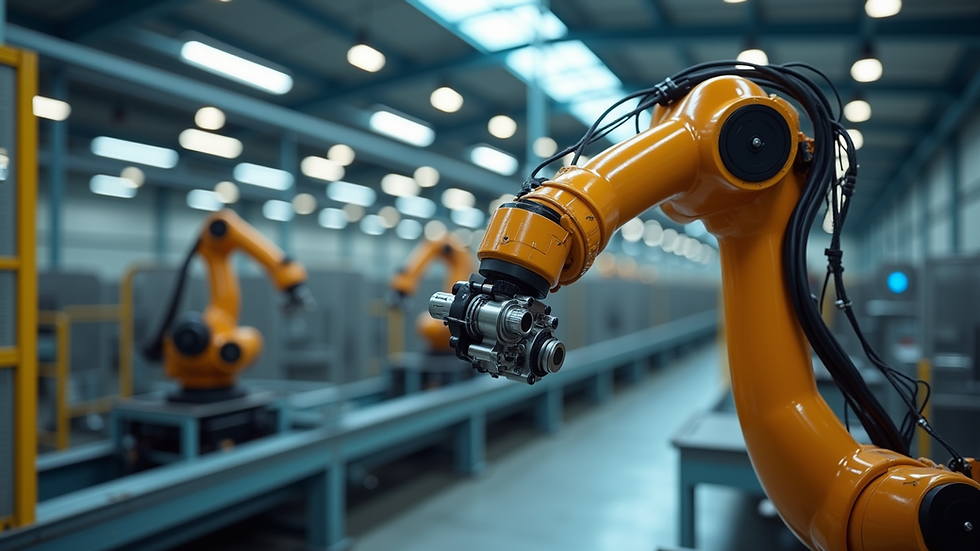
For example, a manufacturer of industrial robotics can leverage safety consulting to develop fail-safe mechanisms and emergency stop functions that comply with ISO 13849.

Key Components of Autonomous Systems Safety Consulting
Effective safety consulting covers several critical areas:
Hazard Identification and Risk Assessment
Identifying potential hazards early in the design phase is essential. This involves:
Analyzing system functions and interactions
Considering environmental factors and human interaction
Using techniques like Failure Mode and Effects Analysis (FMEA) or Fault Tree Analysis (FTA)
Risk assessment quantifies the likelihood and severity of hazards, guiding mitigation priorities.
Safety Requirements and Architecture
Consultants help define clear safety requirements aligned with standards. This includes:
Specifying safety integrity levels (SIL) or Automotive Safety Integrity Levels (ASIL)
Designing system architecture with redundancy and fault tolerance
Integrating safety mechanisms such as watchdog timers and sensor fusion
Verification and Validation
Verification ensures the system meets safety requirements through:
Code reviews and static analysis
Simulation and hardware-in-the-loop testing
Field trials under controlled conditions
Validation confirms the system performs safely in real-world scenarios.
Documentation and Compliance
Comprehensive documentation supports certification and audits. This includes:
Safety plans and reports
Traceability matrices linking requirements to tests
Incident and anomaly logs

Best Practices for Integrating Safety Consulting into Development
To maximize the benefits of safety consulting, companies should:
Engage early: Involve consultants during concept and design phases to identify risks before they become costly issues.
Maintain clear communication: Establish regular updates and feedback loops between engineering teams and consultants.
Adopt a systems engineering approach: Integrate safety considerations into every development stage, from requirements to deployment.
Invest in training: Equip internal teams with knowledge of safety standards and processes.
Use automated tools: Leverage software for risk analysis, requirements management, and testing to improve accuracy and efficiency.
By following these steps, companies can build safer autonomous systems that meet regulatory demands and gain market trust.
Navigating the Future of Autonomous Systems Safety
The autonomous systems landscape is rapidly evolving. Emerging technologies such as AI-driven decision-making and advanced sensor fusion introduce new safety complexities. Staying ahead requires continuous adaptation and expert insight.
Safety consulting will increasingly focus on:
Cybersecurity integration: Protecting systems from malicious attacks that could compromise safety.
Ethical considerations: Ensuring autonomous decisions align with societal values and legal frameworks.
Cross-domain standards: Harmonizing safety requirements across industries like aerospace, automotive, and robotics.
By partnering with experienced consultants, companies can confidently navigate these challenges and deliver autonomous systems that are both innovative and safe.
Safety is not an afterthought but a foundational element of autonomous system success. Through strategic autonomous systems safety consulting, companies can mitigate risks, comply with standards, and accelerate deployment. Embracing expert guidance, including online autonomous systems consulting, positions organizations to lead in this transformative field.
Comments